Who Is Snoring: Me or My Partner? How to Finally Know (2026)
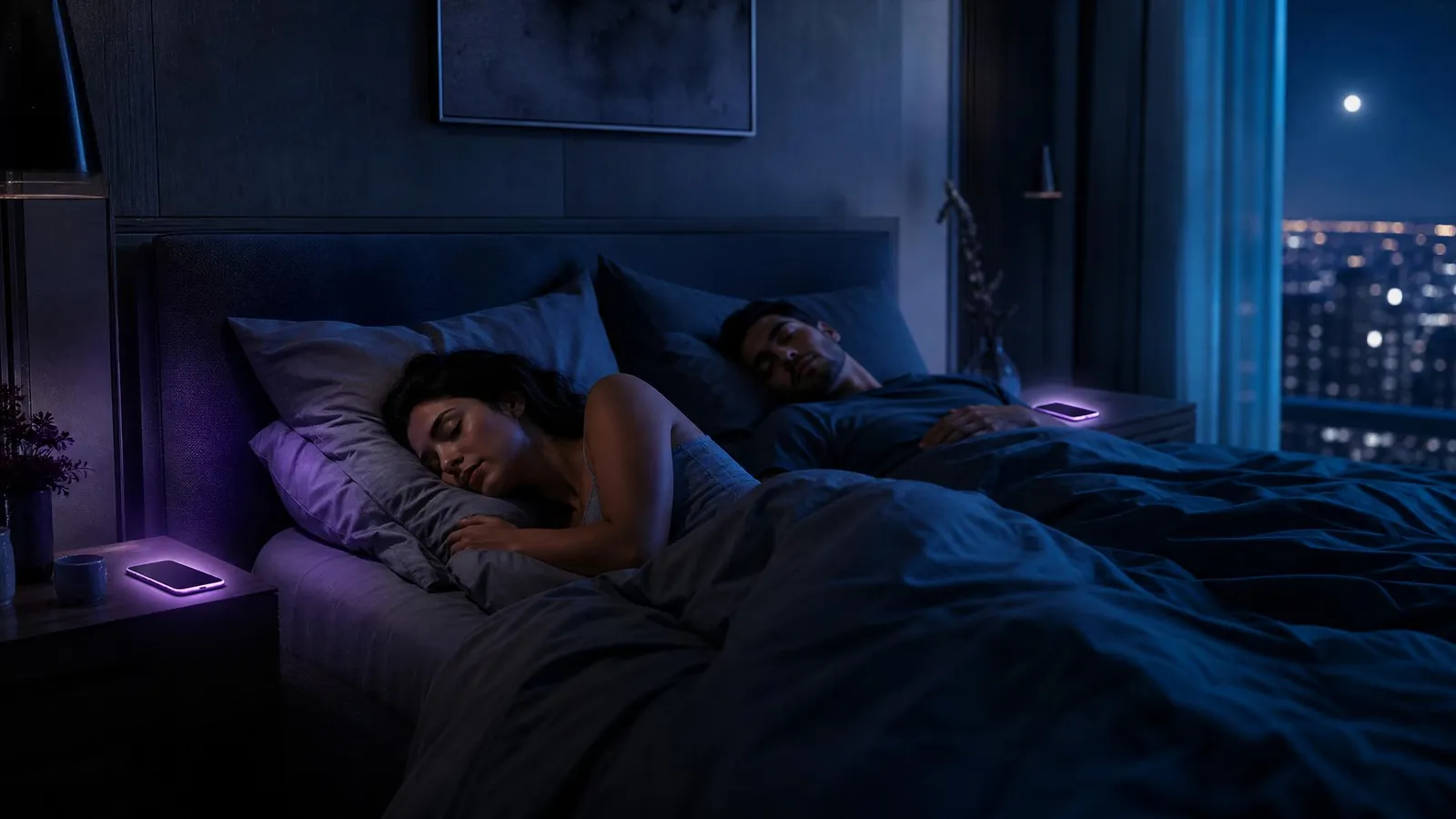
Who Is Snoring: Me or My Partner? How to Finally Know (2026)
It is one of the oldest arguments in any shared bed: you wake up exhausted, certain your partner kept you up all night, and they swear they did not make a sound. Someone is snoring. The frustrating part is that, from inside the bed, almost nobody can prove who. This guide walks through every realistic way to settle it, ranked from least to most reliable, and explains why the answer is usually harder to get than it should be, and how a couple can finally know for certain.
DuoSnore is a wellness and self-tracking app, not a medical device, and nothing here is a diagnosis. The goal is simply to help you find out who snores, and what to do next.
Why is it so hard to tell who is snoring?
Because the one person best placed to hear it, the snorer, is asleep, and the one person wide awake, the partner, only knows that someone in the bed is loud. Snoring is a vibration of relaxed throat tissue as you breathe during sleep, and it is extremely common: the Cleveland Clinic notes that nearly everyone snores at some point, including babies and young children. So « is it me? » is rarely a silly question, it is a genuine coin-flip in most couples.
The numbers make this even murkier. According to the Sleep Foundation, habitual snoring affects roughly 44% of men and 28% of women aged 30 to 60. With odds that high on both sides, two snorers in one bed is not unusual, which means « it must be you » is often only half right.
The result is a stalemate built on missing information. Neither partner has the data to be sure, so the conversation defaults to whoever feels most wronged that morning. To break the tie, you do not need a better argument, you need an actual measurement.
Can a snorer hear themselves snore?
Almost never, and this single fact explains most of the conflict. During sleep your brain heavily filters your own sounds, so the person producing a freight-train rumble can genuinely wake up believing the night was silent. The Sleep Foundation puts it plainly: snoring often goes unnoticed by the snorer, and it is usually a bed partner or housemate who first raises the alarm.
That asymmetry is the heart of the « is it me or you » standoff. One person has direct, exhausting evidence; the other has none, and feels unfairly accused. Both can be completely sincere.
It also means self-assessment is the weakest possible method. Asking a snorer whether they snored is like asking someone to describe a dream they did not have, the information simply was not recorded in their memory. Anything that relies on the snorer's own perception is built on sand. The only way out is an objective record made while you sleep, by something that does not forget.
There is a relationship reason this matters, too. When the only evidence is one partner's word against the other's, the morning becomes a negotiation about feelings rather than facts, and the accused partner often digs in precisely because they have no memory to contradict. Resentment grows on both sides: the tired one feels dismissed, the rested one feels blamed for something they cannot even perceive. An impartial measurement defuses that by removing the need to trust anyone's recollection, which is why so many couples find the data calms the argument before it has even started.
How can you tell who snores when you sleep together?
There are really only five approaches, and they are not equal. Some tell you that snoring happened; far fewer tell you who it came from, which is the question that actually ends the argument. Here is how the common methods compare.
| Method | Distinguishes who snores? | Reliability | Effort / cost | Privacy |
|---|---|---|---|---|
| Trusting your own or your partner's perception | No | Very low | None | High (nothing recorded) |
| One voice recorder or single phone | No, captures the whole bed | Low–moderate | Low | Moderate (raw audio stored) |
| Single-device snoring app | Usually no, one phone, one bed | Moderate | Low | Varies by app |
| DuoSnore: two linked phones, one per person | Yes, each phone measures its own side | High | Low (free at launch) | High (on-device, audio never uploaded) |
| Clinical sleep study | Yes, but for one person at a time | Highest | Very high (referral, cost) | Clinical setting |
The pattern is clear. The cheap, easy options, your own memory or one recorder, are exactly the ones that cannot answer the core question of who. The clinical sleep study can, but it is overkill for a domestic disagreement and only assesses one person at a time. The gap in the middle, reliable attribution for two people without a lab, is precisely the space a couple-focused tool is built for. The rest of this article walks down that table, from worst to best.
Why a single recorder or one phone is not enough
Recording the night seems like the obvious fix, and it is a real step up from arguing, but it has a built-in blind spot: one microphone hears one room, not two people. Whether it is a phone voice memo or a standalone dictaphone, the device captures the whole bed as a single mixed stream. You can prove that something snored, but the louder or closer sleeper dominates the audio, and you still cannot cleanly say it was the person on the left or the right.
This matters more than it sounds, because the loudness of snoring is not subtle. Snoring can routinely reach 50 decibels and beyond, comparable to ordinary conversation, with peaks far higher. When one partner's snore is bouncing around the room at that level, a single recorder on the nightstand has no way to know whether the sound originated 30 centimetres away or a metre and a half across the mattress.
There is also the timestamp problem. Even if you scrub back through an hour of recording and find a loud passage, you are still left guessing which body it came from, and in a quiet bedroom both partners can produce sounds that look almost identical on a single waveform. A lone recorder gives you volume and duration, but no position, and position is the one clue that actually separates two people sharing a mattress. That missing dimension is the whole reason a second device changes the answer.
So a lone recording is genuinely useful for one thing, confirming that snoring is happening, and weak at the thing you actually care about, attributing it. It turns « I think you snore » into « someone here snores », which is progress, but it does not end the debate. For that, you need to capture each person separately.
Can a single snoring app tell who is snoring?
This is where most people land, because dedicated snoring apps are a clear upgrade over a raw recording, they score the snoring, chart it over the night and trim hours of audio down to the highlights. But the popular ones share the same structural limit as a dictaphone: one app, one phone, one bed. They tell you how much snoring happened, not which of you produced it.
A few premium apps now try to close that gap from a single device. Sleep Cycle, for example, offers a « Who's Snoring? » feature that attempts to distinguish snorers in the same room, but it sits behind a paid subscription, runs on one phone, and needs several nights of machine-learning training before it ventures a guess, and even then it is inferring two people from one microphone. It is a genuinely clever workaround, but it is still one device trying to do a two-device job.
The cleaner solution is structural rather than statistical: instead of teaching one phone to guess between two sleepers, give each sleeper their own phone. That is the difference between inferring who snored and simply measuring it. If you are also trying to work out your own habit specifically, our guide on how to know if you snore covers solo detection in more depth.
How does DuoSnore tell each partner's snoring apart?
By not asking one device to do the impossible. DuoSnore is built for couples around a simple idea, two nights, one screen: you each keep your own phone on your own nightstand, link the two accounts with an invite code, and every phone measures only the sleeper beside it. Because the device is centimetres from one person and a full mattress-width from the other, attribution stops being a guess and becomes a measurement.
Each of you gets your own nightly Snore Score from 0 to 100, your snoring minutes, your peak volume in decibels and your intensity, then the two are laid out side by side. The morning conversation changes completely: instead of « I think it was you », you both look at two clear results and simply see who snored, how much, and how loudly. If a sound is in dispute, either partner can share an optional short audio clip as proof.
Once you know who snores, the same setup answers the obvious next question, why. DuoSnore lets each person log the factors that plausibly affect their own nights, alcohol, stress, exercise, a blocked nose, smoking or a sleeping pill, and then ties those to that night's score. So the data does double duty: first it settles who the snorer is, then it shows that specific person what actually moves their numbers, on their own body rather than on generic advice.
Crucially, all of this analysis happens on each device. The audio is processed locally and never uploaded, so you get the attribution without surrendering a recording of your bedroom to anyone's server. According to the American Academy of Sleep Medicine, about 25% of adults are habitual snorers and roughly half of people snore at least occasionally, so the odds that one of you is the culprit are high, which is exactly why measuring both, privately, settles it. You can join the waitlist at duosnore.com to be first in line when it launches.
What should you do once you know who snores?
Treat the answer as a starting point, not a verdict, because knowing who is only useful if it leads to better sleep for both of you. The worst outcome is using the data as ammunition. The best outcome is using it as a shared baseline you improve together, which also keeps the snorer motivated instead of defensive.
If it turns out to be you, the highest-leverage moves are well established: sleep on your side, clear nasal congestion, and skip alcohol within a few hours of bed. Our pillar guide, how to stop snoring, ranks the methods that actually hold up in research. If it turns out to be your partner, the playbook is different, you are managing both their snoring and your own exhaustion, which is covered in what to do when your partner snores.
There is also a real reason not to ignore the result. Reducing snoring is not only about peace and quiet, it protects the listener's sleep too: a classic Mayo Clinic study found that bed partners lose roughly an hour of sleep per night next to a snoring spouse. So once you know who snores, the shared goal is obvious, quieter nights and more rest for both of you. And if the snoring is loud and habitual with gasping or breathing pauses, that is a flag to see a doctor, not something an app diagnoses.
Frequently asked questions
How do I know if it is me or my partner snoring?
The dependable method is to measure both people at the same time, not to rely on memory. Each partner keeps their own phone running overnight on their own side of the bed, and a couple-focused app attributes each snore to the right person. That side-by-side comparison answers who snores far better than asking each other in the morning.
Can a snorer actually hear themselves snore?
Almost never. Snoring happens during sleep, when the brain largely tunes out your own sounds, so the snorer often has no idea while a bed partner is wide awake. This is exactly why disputes start: one person is sure they are silent, and the other is sure they were kept up all night.
Can a single phone or voice recorder tell who is snoring?
It can prove that someone in the room snored, but not who. One microphone captures the whole bed as a single audio stream, so two sleepers blur together and the louder or closer person dominates. Without a second device on the other side, a lone recording cannot reliably attribute the snoring to one partner.
Can a regular snoring app tell who is snoring in a couple?
Most single-device snoring apps cannot, because they monitor one phone for one bed. A few premium tools try to label snorers from one device, but they need several nights of training and still run on a single microphone. Linking two phones, one per person, is the more direct way to know who snores.
How does DuoSnore tell each partner's snoring apart?
DuoSnore links two accounts with an invite code, and each phone measures only its own side of the bed. You each get your own Snore Score, snoring minutes and peak volume, then compare them side by side, with an optional shared audio clip. All analysis stays on each device, so the audio never leaves your phones.
What should we do once we know who snores?
Treat it as a shared project, not a verdict. The person who snores can start with side-sleeping, clearing their nose and skipping late alcohol, while the partner protects their own sleep. Tracking together shows which changes actually reduce the snoring, which keeps both people motivated instead of arguing.
Is it possible that both partners snore?
Yes, and it is common. Habitual snoring affects a large share of adults of both sexes, so two snorers in one bed is normal. Measuring each person separately is the only way to see who snores more, how often, and whether one or both would benefit from changes.
Wellness, not a diagnosis. DuoSnore is not a medical device and this article is not a substitute for professional medical advice. If you have symptoms or any concern about your health or sleep, consult a healthcare professional.
Related articles

Snoring Decibels: How Loud Is Too Loud? (2026)
Most snoring falls between 40 and 60 decibels, and above 60 it is louder than a normal conversation. Here is the scale sleep medicine uses, what it does to the person beside you, and why your own perception cannot be trusted.
Sleep Divorce: Stats, Pros and Cons, and the Data-First Alternative (2026)
Sleep divorce means sleeping apart on purpose. Here are the real numbers, the honest pros and cons, why it doesn't fix snoring, and how to measure and reduce snoring together first.