How to Know If You Snore (and the Best Way to Track It) (2026)
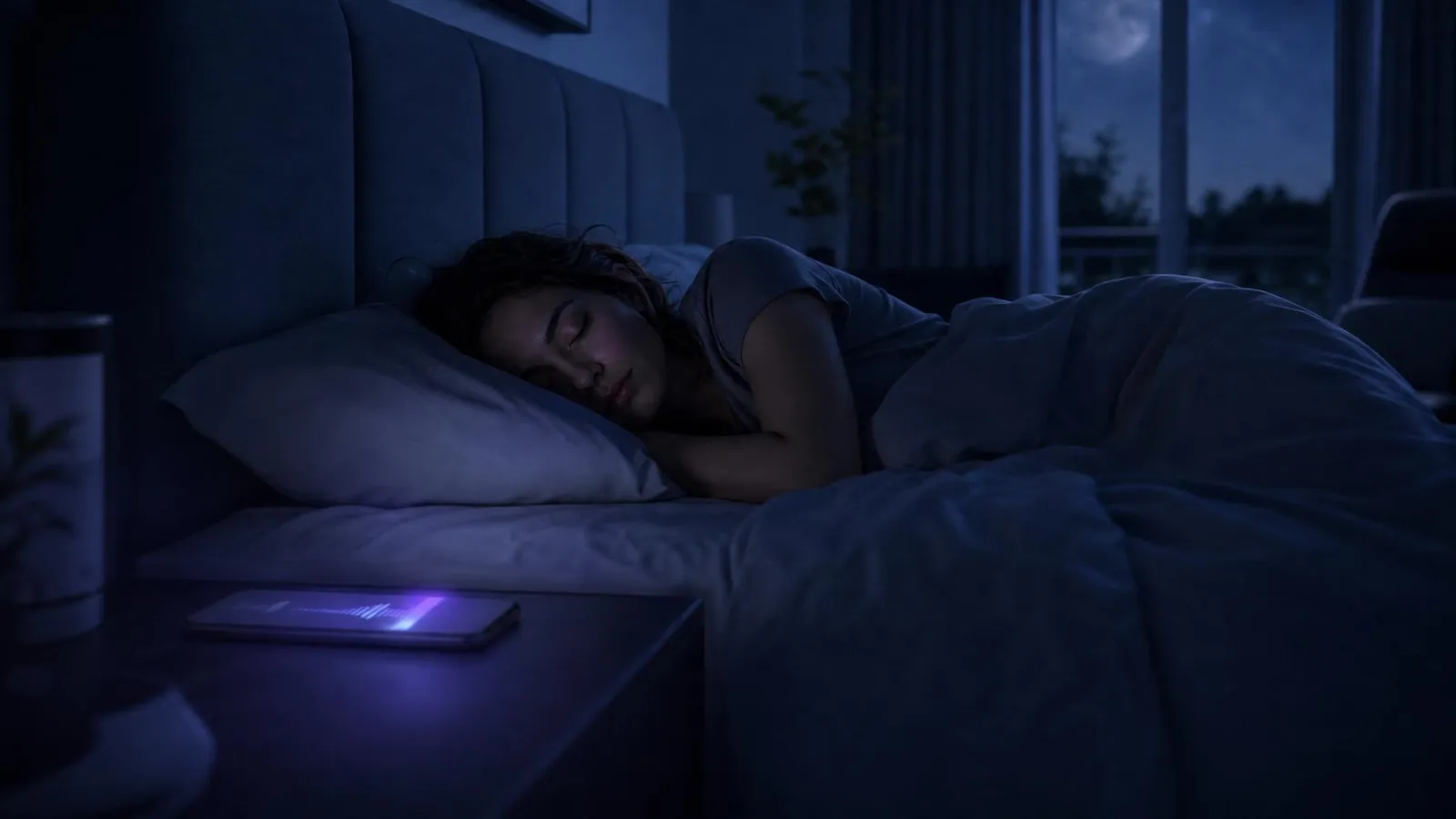
How to Know If You Snore (and the Best Way to Track It) (2026)
It is a strangely hard question to answer about yourself: do you snore? When you are asleep you cannot hear it, and if you sleep alone there is no witness at all. Many people only find out when a partner complains, on a trip with friends, or after years of waking up tired and never knowing why. The good news is that you no longer have to guess. There are clear morning signs that point to snoring, and there are simple ways to objectively measure it, on your own phone, in your own bed, tonight. This guide walks through both.
DuoSnore is a wellness app, not a medical device, and nothing here is a diagnosis. Use it to find out whether you snore and to bring better information to a clinician if you need to.
How can I tell if I snore when I sleep alone?
This is the hardest case, and the most common reason people search for an answer. If you live alone or sleep apart from your partner, no one can tell you what happens at 3 a.m. You are effectively asking your own body to report on something it did while you were unconscious. That is exactly why indirect signs and direct measurement matter so much more for solo sleepers than for couples.
The reassuring part is that snoring leaves fingerprints you can read in the morning, and the night itself can be measured. You do not need a sleep lab or a partner. A phone on the nightstand can listen to the sound of your breathing all night and tell you, with a number, whether you snored and how loudly. Before we get to the measuring tools, it helps to know the everyday clues that hint you might be a snorer in the first place.
The bottom line: sleeping alone removes your only human witness, so for you the answer comes from signs plus a recording, not from someone shaking you awake.
What are the signs that you snore?
Your mornings tell on you. Snoring forces air through a narrowed, vibrating airway, often with your mouth open, and that leaves a recognisable set of after-effects by the time you wake. None of them is proof on its own, but together they build a strong case.
- A dry or sore throat on waking — hours of turbulent airflow over the throat tissues leave them dry and scratchy.
- A very dry mouth — snoring usually means mouth-breathing, which dries everything out overnight.
- Morning headaches — a classic clue, often linked to disturbed breathing during sleep.
- Daytime tiredness despite a full night — fragmented, noisy sleep is less restorative even when the hours look fine.
- A partner who complains, nudges you, or leaves the room — the most direct human signal there is.
According to the Cleveland Clinic, snoring is commonly accompanied by daytime sleepiness, not feeling refreshed during the day, and in some cases gasping awake at night. The morning-headache and dry-mouth pattern is well documented too: the Sleep Foundation notes that morning headaches affect roughly 10% to 30% of people with obstructive sleep apnea, and that one-third or more experience dry mouth. The takeaway: if several of these show up most mornings, you very likely snore, and it is worth confirming with a measurement rather than continuing to wonder.
Why guessing is not enough, and what to measure instead
Because the signs above are suggestive, not conclusive, and the only honest answer is a measured one. Plenty of things cause a dry mouth or a tired morning; snoring is just one of them. And snoring varies enormously from night to night with alcohol, position, congestion and fatigue, so a single restless night proves nothing either way. What you actually want is data: did I snore, how much, and how loudly?
There are two practical ways to get that data at home. The crude option is to record yourself. The far better option is a dedicated snore-tracking app that listens, isolates the snore events, and reports a score and a volume. The difference is the difference between a three-hour raw audio file you will never listen to, and a single morning summary that says, in effect, "you snored for 38 minutes, peaking at 54 decibels." The next sections compare the methods directly.
The takeaway: stop trying to deduce whether you snore from how you feel, and instead measure the night itself, which is now easy to do.
Can you record yourself snoring?
Yes, and it is a reasonable first experiment, but it has real limits. Any phone has a voice-memo app; leave it running on the nightstand and in the morning you will have captured the night, snoring included. For a one-off "do I make the sound at all?" check, that can be enough, and it costs nothing.
The problems show up fast. The file is hours long, mostly silence and rustling, and scrubbing through it to find the snoring is tedious. It gives you no score, no volume reading and no trend, so you cannot compare last night to last month or see whether stopping alcohol helped. The recording quality and timestamps are crude, and most voice apps will happily eat your phone storage with a single night. A raw recording answers "yes or no" once; it does not help you understand or improve. The takeaway: recording yourself is a fine first proof, but it is a blunt instrument, which is why purpose-built apps exist.
Does a sleep tracker detect snoring?
Usually not in the way you would hope, and this is the single most important distinction in this article. A general sleep tracker, whether a watch, a ring or a phone app, is built to estimate your sleep: how long you slept, your stages, your restlessness, often from movement and heart rate rather than sound. That is genuinely useful, but it answers a different question. Your sleep score can look fine on a night you snored loudly, because the device was never measuring the snore.
A dedicated snore tracker does the opposite: it listens to the actual sound of your breathing and measures the snoring itself, giving you a snore-specific score and a volume. If your question is "do I snore, and how much?", that is the tool that answers it. Some sleep trackers bolt on a basic noise flag, but few isolate and score snoring with any precision, and even a sophisticated platform's headline number is about sleep, not snoring. The takeaway: do not assume your sleep tracker is watching your snoring; if snoring is the question, you want a tracker designed for it.
Which method should you use to find out if you snore?
It depends on how much you want to know and whether you sleep alone, so here is a direct comparison of the realistic options. The honest summary is that asking a partner is great if you have one and only want a yes/no, while a dedicated app is the only method that works solo and gives you measurable numbers.
| Method | Measures the snore? | Gives a score / dB? | Works sleeping alone? | Privacy | Cost |
|---|---|---|---|---|---|
| Ask your partner | No (subjective) | No | No — needs a witness | High (no recording) | Free |
| Voice memo / phone recorder | Captures sound only | No | Yes | Audio stored on phone | Free |
| General sleep tracker | Mostly no (measures sleep) | Rarely | Yes | Often cloud-synced | Free–paid |
| Dedicated snoring app | Yes | Yes | Yes | Varies by app | Free–paid |
| DuoSnore (on-device + couple) | Yes | Yes — Snore Score + dB | Yes | High — analysed on-device, no upload | Free at launch |
A few things stand out. A partner's report is valuable but binary and unreliable as a record. A voice memo proves the sound exists but measures nothing. A general sleep tracker is the common trap: people assume it watches their snoring when it mostly watches their sleep. A dedicated snoring app is the only row that ticks every box that matters for a solo sleeper, and the privacy column is where the approaches diverge most, which we cover below. The takeaway: if you sleep alone or want real numbers, a dedicated snore tracker is the right tool; everything else is a partial answer.
How loud is snoring, and what do the decibels mean?
Loud enough to measure, and the number tells you something useful. Clinicians treat snoring as a sound with a threshold, not a vague nuisance, which is exactly why an app can quantify it. Understanding the rough scale helps you interpret your own peak-volume reading.
In sleep research, snoring is typically defined as breathing sound at or above about 40 dB(A). According to a clinical study indexed in the National Library of Medicine, mean snoring intensity across participants was around 45 dB(A), while the louder group averaged roughly 57 dB(A), and the authors note that nighttime noise above about 53 dB(A) is associated with disturbed sleep and adverse effects for the person next to you. As a practical ladder: light snoring sits around 40 to 50 dB(A) (think quiet library to soft speech), loud habitual snoring pushes past 53 dB(A), and heavy snoring can climb beyond 60 dB(A), which approaches the level of ordinary conversation. The takeaway: a peak-decibel reading is not just a curiosity; it places your snoring on a recognised loudness scale, which is far more informative than "I think I snore."
How does DuoSnore measure snoring?
By turning your phone into a dedicated snore meter that runs entirely on the device. You place the phone on your nightstand before bed, and overnight it listens to the sound of your breathing and analyses it locally. Crucially, that audio never leaves your phone: nothing is uploaded, nothing is stored on a server. For a recording of your own bedroom, that on-device privacy is what makes pressing "start" comfortable in the first place.
In the morning you get a clear picture rather than a raw file: a Snore Score from 0 to 100 for the night, your peak volume in decibels, the minutes you spent snoring, and an intensity read. Because it records every night, you also see a trend, so you can tell whether a change, side-sleeping, skipping a late drink, clearing your nose, actually moved your number. DuoSnore is built around couples, "two nights, one screen," so two linked phones can each track their own side of the bed, but it works just as well solo, which is the harder case this whole article is about. It also surfaces indicative apnea-risk signals and a STOP-BANG style checklist, though those are informational, not a diagnosis. The takeaway: DuoSnore answers "do I snore?" with an actual number, privately, on the phone already on your nightstand.
If your snoring turns out to be the loud, habitual kind, the next question is what to do about it. Start with our pillar guide, How to Stop Snoring: Evidence-Based Methods That Actually Work. If a partner is involved and you are trying to work out whose snoring is whose, see Who Is Snoring, Me or My Partner?. And because loud snoring can occasionally signal something more, it is worth understanding the line between the two in Snoring vs Sleep Apnea.
Are snoring apps accurate and private?
Accurate enough to be genuinely useful, and as private as you insist they are, but honest framing matters. On accuracy, the better snore-detection apps perform well against expert assessment: one validated smartphone app reached about 95% accuracy with strong specificity when checked against an ENT specialist's review, as reported in a study on the National Library of Medicine. Snoring is also extremely common, the Sleep Foundation estimates it affects roughly 57% of men and 40% of women in the U.S., so this is a mainstream thing to measure, not an edge case.
Two caveats keep this honest. First, these apps are indicative wellness tools, not diagnostic devices: they are excellent for tracking how much and how loudly you snore and whether it is improving, but they do not diagnose sleep apnea, and loud snoring with gasping, choking or breathing pauses is a reason to see a doctor, not just check an app. Second, privacy varies enormously by app, because you are recording audio in your bedroom. The strongest privacy posture is on-device analysis, where the audio is processed on your phone and never uploaded, which is the approach DuoSnore takes. The takeaway: a good snore app will reliably tell you whether and how much you snore, on-device for privacy, as long as you treat it as a measurement and self-tracking tool rather than a medical verdict, and you can find out, for free, starting tonight.
Frequently asked questions
How can I tell if I snore when I sleep alone?
With no one to hear you, rely on indirect signs and a recording. A dry or sore throat, a parched mouth, morning headaches and unrefreshing sleep all point to snoring or mouth-breathing at night. To confirm it, leave a snore-tracking app or a voice recorder running overnight; the app turns the audio into a score and a peak decibel reading so you know for certain.
What are the signs that you snore?
Common morning clues are a dry or sore throat, a very dry mouth, a headache on waking, and daytime tiredness despite enough hours in bed. A partner complaining, or moving to another room, is the most obvious sign. None of these prove it alone, which is why measuring your nights is the reliable way to be sure.
Can you record yourself snoring?
Yes. A phone voice-memo app left running overnight will capture snoring, but the file is long, raw and tedious to review, and it gives you no score or volume reading. A dedicated snore-tracking app does the listening for you, isolating snore events and summarising how much and how loudly you snored, so you do not have to scrub through hours of audio.
Does a sleep tracker detect snoring?
Most general sleep trackers estimate sleep stages from movement and heart rate; they measure your sleep, not the snore itself. Some flag noise, but few isolate and score snoring specifically. A dedicated snore tracker listens to the sound of your breathing and measures the snoring directly, which is a different and more relevant job if your question is whether you snore.
How does DuoSnore measure snoring?
You place your phone on the nightstand and DuoSnore analyses the night's audio entirely on the device. Nothing is uploaded. It produces a Snore Score from 0 to 100, your peak volume in decibels, and the minutes you spent snoring, so you can see whether you snore, how much, and how the number trends over time. It also works for couples on two linked phones.
How loud is snoring in decibels?
Clinically, snoring is usually defined as breathing sound at or above about 40 dB(A). Typical snoring sits in the 40 to 50 dB(A) range, while loud, habitual snoring runs higher; in one study the louder group averaged about 57 dB(A), and noise above roughly 53 dB(A) is linked to disturbed sleep for a bed partner. Heavy snoring can climb past 60 dB(A), comparable to normal conversation.
Are snoring apps accurate and private?
Good snore apps agree closely with expert review; one validated app reached about 95% accuracy. They are reliable for tracking trends but are indicative wellness tools, not a diagnosis. Privacy depends on the app: choose one that analyses audio on-device so the recording never leaves your phone. DuoSnore processes everything locally and uploads no audio.
Wellness, not a diagnosis. DuoSnore is not a medical device and this article is not a substitute for professional medical advice. If you have symptoms or any concern about your health or sleep, consult a healthcare professional.
Related articles
How Much Snoring Is Normal? What the Numbers Actually Say (2026)
There is no official medical threshold for "normal" snoring. Here is what research actually measures — percentage of the night spent snoring, snoring index — how you compare to the population, and the one signal that should genuinely concern you.

Why Am I Still Tired After 8 Hours of Sleep? (2026)
Sleeping 8 hours but still exhausted? The problem is usually quality, not quantity. Learn how snoring, sleep apnea, irregular schedules, alcohol and screens fragment your nights, and how to measure what is really stealing your rest.